Cadmore Media Sample Page
Example of an audio embed in a journal article
Related articles
View multiple media player configuration samples
Dec 25, 2024 7:10:12 PM
Beyond the Carbon Crunch: Why Forests Are More Than Just CO₂ Vacuums [Sample embed with transcript in a journal article]
Jan 1, 2025 1:23:45 AM
Leisure Preferences of Psittacus Viridum: A Qualitative Study on the Recreational Habits of Green Parrots [Sample of multiple embeds on a journal article]
Feb 14, 2025 7:48:12 AM
A Comprehensive Study on Camel Migration Patterns in Desert Environments [Sample embed player configurations in a journal article]
May 5, 2025 11:40:01 PM
What Is Biodiversity? | Ecology & Environment | Biology | FuseSchool [Sample audio embed in a journal article]
Mar 14, 2025 3:14:15 AM
BIO+ Journal | Earth, Air, Water, Fire Conference: The Elements of Life | Video | 22 April 2025
What Is Biodiversity? | Ecology & Environment | Biology | FuseSchool
|
Share: |

|

|

|

|

|
Abstract
Biodiversity refers to the variety of life found on Earth, encompassing the diversity within species, between species, and across ecosystems. It includes everything from the genetic differences among individuals to the wide range of ecosystems such as forests, coral reefs, and wetlands. Biodiversity is essential for ecosystem stability, providing critical services like pollination, nutrient cycling, climate regulation, and food security. It forms the foundation of life-support systems on the planet, making its preservation vital for both environmental health and human well-being.
Podcast with transcript and segments on ecological and environment biodiversity. FUSE SCHOOL - GLOBAL EDUCATION
Humans and Biodiversity
Humans are deeply connected to biodiversity, relying on it for food, medicine, clean water, and climate regulation. Our cultural, spiritual, and recreational lives are also enriched by the natural world. In recent years, there’s been a noticeable surge in interest in houseplants and home gardening, reflecting a growing awareness and appreciation for living things, even within urban environments. This trend highlights an innate human desire to stay connected to nature and can serve as a gateway to broader environmental awareness. However, while this personal connection is valuable, it also underscores the need to protect the biodiversity that exists beyond our windowsills—ensuring that natural ecosystems and their complex webs of life continue to thrive.
Preserving biodiversity involves a multifaceted approach that targets different ecological dimensions. The effectiveness of various conservation strategies—such as establishing protected areas, promoting sustainable agriculture, or implementing captive breeding programs—can be assessed by their impact on key aspects of biodiversity. As shown in the graph below (fig. 1), protected areas and reforestation efforts yield significant benefits for habitat conservation and ecosystem function, while captive breeding programs are particularly effective in enhancing genetic diversity and species survival. This illustrates the importance of tailored strategies that address specific conservation goals, emphasizing that no single method can safeguard biodiversity on its own.
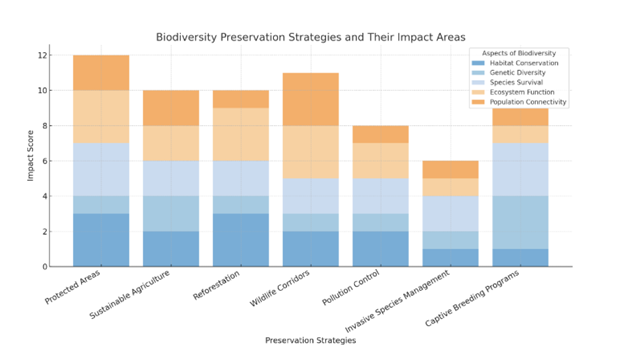
Figure 1. Impact score of biodiversity preservation strategies
Understanding biodiversity requires examining ecological patterns across both global and local scales. While global biodiversity highlights overarching trends such as species richness and ecosystem services, local biodiversity emphasizes unique community structures and endemic species. This comparison (see figure 2) reveals that although global assessments often report higher overall diversity, local ecosystems may exhibit greater endemism and specialized genetic variation. Recognizing these scale-dependent differences is crucial for effective conservation planning, as it ensures both broad ecological integrity and the preservation of region-specific biological heritage.
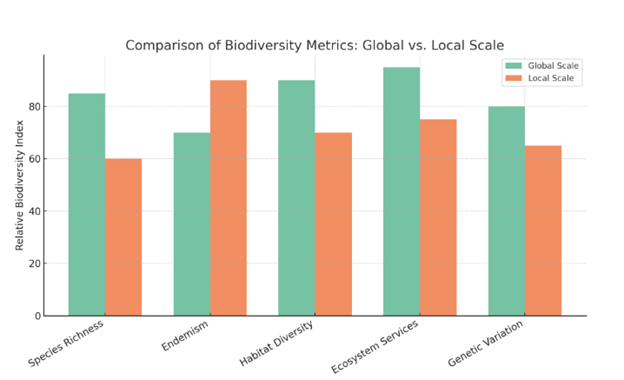
Figure 2. Comparison of Biodiversity Metrics
Summary
Biodiversity refers to the variety of life on Earth, encompassing genetic diversity, species variety, and the range of ecosystems. It plays a vital role in maintaining ecosystem stability and supporting life through services like pollination, nutrient cycling, and climate regulation. Humans rely heavily on biodiversity for essentials such as food, medicine, and clean water, as well as for cultural and recreational enrichment. The recent rise in interest in houseplants and gardening reflects a growing awareness of nature, even in urban environments. Conservation of biodiversity requires diverse strategies, including protected areas, sustainable farming, and captive breeding, each contributing differently to ecological goals. Understanding biodiversity at both global and local levels is important, as local ecosystems often harbor unique species and genetic traits not captured in global trends. Effective biodiversity conservation depends on recognizing these ecological scales and implementing strategies tailored to specific contexts.
Citation
What Is Biodiversity? | Ecology & Environment | Biology | FuseSchool. (2016). [YouTube Video/Altered]. In YouTube. https://www.youtube.com/watch?v=_bk2nnDI68g
Disclaimer
Portions of this page include sample or placeholder content generated by ChatGPT, an AI developed by OpenAI, for demonstration and layout purposes only. All images and videos are used under Creative Commons licenses and have been appropriately credited in accordance with their licensing terms.